Your fabric sofa looks absolutely fine at first glance 👀./p>
Then come the real players… Dust marks. Food crumbs. Sweat patches. That weird smell you can’t even express or explain to anyone.
You urgently want to clean it. But water? That sounds risky… right? Water will surely leave stains and trigger your sofa fabric's shrinkage.
🌊 Fact is: Water also brings back those awful smells if not dried properly.
But… Dry cleaning a fabric sofa, on the other hand, is not a secret hack anymore. It is just a smart way to keep sofas fresh without damage. And yes—it works when done right.
If you are still not convinced, then you can simply contact sofa cleaning services Dubai experts who know how to clean any type of fabric sofa upholstery on the same day.
In this sofa fabric guide, we will get to know the best possible ways on how to clean fabric sofa without water and what things you must avoid that could risk your fabric's shine.
Alright. Let’s get into it…
Smart Methods to Clean Fabric Sofa Without Water (All Work Effectively)
Here are some of the best methods you can try, but before that, check the Care Tag 🔖 that is usually found under the seat cushions:
🟡 Important pro step before using any of these…
-> S: Solvent only (methods used in this blog).
-> W: Water-based cleaning allowed.
-> WS: Either water or solvent.
-> X: Vacuum only (professional cleaning required).
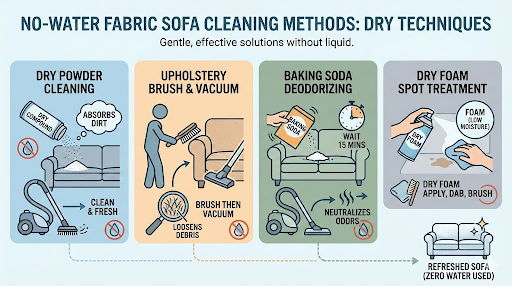
— Dry Vacuum Cleaning (Your Sofa’s First Line of Defense)
Before anything else, just vacuum your sofa properly. With that, you will remove dust or hair.
And if you are thinking of skipping this step, then every other method will be just a waste of time. Because all other cleaning will just push that dirt deeper and deeper.
You have to use a soft brush attachment and move slowly on the sofa surface. Do not rush; it can eventually damage the area.
🟡 Things you have to keep in mind while using this method:
- Always vacuum corners and under cushions
- Use a soft brush
- Clean in one direction
- Repeat weekly
— Baking Soda Dry Deodorizing Method
Do you know that baking soda works best for cleaning fabric, and if it is for a sofa, then …. It's the best one. It can simply absorb oils as well as neutralize smells without moisture.
This method is perfect for sofas that smell “used” but don’t look dirty yet. Sprinkle lightly, then vacuum thoroughly.
🟡 Things you have to keep in mind while using this method:
- Absorbs body oils and odors
- Safe for sofa fabric upholstery
- Best for light dirt, actually
— Dry Upholstery Foam Cleaning
Dry foam cleaners like Mhepzol or generic "no-wash" foam cleaners cleanse your sofa fabric without even soaking it. The foam lifts particles and keeps moisture minimal.
This method works well for visible stains. Make sure you always test the patch first and then gently brush it.
🟡 Benefits you’ll get after using this method:
- Cleans stains without one drop 💧 of wet patches
- Maintains fabric texture as well as pure color
- Dries faster than any liquid cleaners
— Fabric Powder Cleaners (Low-Moisture Option)
Fabric cleaning powders are especially designed to trap oils. Once you spread it, the activated substance starts giving its 100%. After cleaning, you can vacuum them out.
This sofa cleaning without water technique suits those types of sofas that cannot handle even 1% liquid exposure at all. It’s often used in commercial upholstery maintenance.
🟡 Benefits you’ll get after using this method:
- Works best without liquid application
- Reduces odor and surface level stains
- Needs strong vacuum for genuine results
- Yes, it is suitable for delicate fabric blends
— Cornstarch or Talcum Powder for Greasy Spots
Greasy stains feel sooo scary that you even think to keep food items away from fabric… But these cornstarch or talcum-type powders can handle them surprisingly well.
Cornstarch or talcum powder can absorb up to 66% of oil without even spreading the stain. This will work best when stains are fresh.
🟡 Benefits you’ll get after using this method:
- Absorbs oil (mostly whole)
- Works well on food stains
- Do only gentle brushing afterward
- Avoid rubbing
— Spot Cleaning With Fabric-Safe Dry Solvents
Some stains need targeted action. Dry cleaning solvents made for upholstery tackle ink and food marks.
Use sparingly. Dab. Never flood the fabric. This method feels small but saves sofas from permanent marks.
- Designed for zero-water use
- Effective on stubborn local stains
- Always patch test first
- Use microfiber cloth for control
— Soft Brushing to Revive Fabric Fibers
Over time, sofa fabric flattens and traps dust. Soft brushing lifts fibers and releases hidden dirt. This technique improves appearance and touch without adding any moisture. It also helps reduce fabric dullness.
- Restores fabric texture
- Releases embedded dust
- Improves airflow within fabric
- Use a clean, soft upholstery brush
— Activated Charcoal for Odor Absorption
For smells, activated charcoal works best in this case. Place charcoal pouches near or under cushions. It can simply remove strong odors without touching the fabric.
- Absorbs moisture and odors
- Works continuously without effort
- No contact with fabric needed
- Perfect for musty sofas
— Professional Dry Sofa Cleaning (When DIY Stops Working)
Some sofas carry years of dirt, sweat, and trapped odors. Home methods help—but they have limits.
Professional sofa cleaning services Dubai use controlled dry systems that clean deeper without soaking fabric. This prevents shrinkage and smell returns.
- Industrial-grade dry extraction
- Safe for delicate and premium fabrics
- Same-day drying in most cases
- Extends sofa life significantly
➕ Final Tip Before You Move Ahead
If your sofa still smells odd, feels sticky, or shows dull patches after dry cleaning attempts—pause. That’s not failure. That’s your sign to call sofa cleaning services Dubai professionals before damage sets in. Sometimes, the smartest cleaning move is knowing when to stop.
Fabric-Wise Guide to Cleaning a Sofa Without Water
— Linen Fabric Sofas (Beautiful but Sensitive)
Linen looks elegant but reacts quickly to pressure and products. Dry vacuuming and light powder methods work best here.
Aggressive brushing can cause discoloration. Linen needs soft handling and patience. If stains feel old, professional dry cleaning is safer than repeated DIY attempts.
— Cotton Fabric Sofas (Comfortable and Forgiving)
Cotton handles dry cleaning well if you stay gentle. Baking soda, dry foam, and fabric powders work nicely.
The main risk is color fading if products sit too long. Cotton absorbs oils easily, so regular vacuuming and monthly dry deodorizing keep it fresh without effort.
— Velvet Fabric Sofas (Looks Luxury, Needs Respect)
Velvet hates pressure and moisture. Dry brushing in one direction is essential. Powders should be used lightly and removed fully. Never scrub velvet.
It crushes fibers and leaves permanent marks. For stains, spot treatment with fabric-safe dry solvent works better than repeated home attempts.
— Suede or Microfiber Sofas (Tricky but Manageable)
These fabrics attract oils and dust quickly. Vacuuming and soft brushing restore texture. Cornstarch works well for grease spots.
Over-cleaning damages the finish, so space out cleaning sessions. When stains spread or darken, professional dry sofa cleaning is the safest option.
— Mixed Fabric or Unknown Upholstery
If you don’t know your sofa’s fabric type, then make sure you stay away from these methods… Ok!! Stick to vacuuming and only light powder deodorizing.
Avoid any type of strong solvents, as this can harm your sofa upholstery. This is where you must connect with licensed sofa cleaning services Dubai professionals who can identify fabric correctly, even before touching it.
Mistakes to Avoid While Dry-Cleaning a Fabric Sofa
— Using Too Much Product Thinking It Will Clean Better
This is where most people go sooo wrong. You think—more powder = more foam = more spray feels, and then it will be a stronger cleaning.
But in reality, excess product will sit inside the fabric and attract more and more tough dust later.
Your sofa may look clean for a day only; then you will see dullness or odd smells.
Dry cleaning works best when you use less and work patiently. Gentle action always beats aggressive cleaning.
— Skipping Patch Testing Because “It’ll Be Fine”
Every fabric reacts differently. That cleaner, who worked on your friend’s sofa, may ruin yours.
Skipping a patch test is pure gambling. Colors may fade. Fabric may stiffen. Texture may change forever.
Always test on a hidden corner and wait. A few extra minutes here save you from permanent regret later.
— Rubbing Stains Instead of Blotting Them
That panic moment when you see a stain makes your hands move fast. Rubbing feels natural, but it pushes dirt deeper into fibers.
It also spreads stains wider. Blotting feels slower, but it actually lifts the stain out. When you rub, you damage fabric threads. When you blot, you protect them.
— Ignoring Ventilation After Dry Cleaning
Dry cleaning still releases trapped dust and odors into the air. If your room stays closed, smells linger, and fabric feels heavy. Open windows. Let air move.
Even dry methods need breathing space. This small step decides whether your sofa smells fresh or just “less bad.”
— Mixing Random DIY Hacks Without Understanding Fabric
Baking soda, vinegar, alcohol, powders—mixing everything rarely ends well. What helps one fabric can damage another.
Many sofas get ruined not by dirt, but by overconfidence. If you feel unsure, stop experimenting. That’s usually the moment professionals step in.
Final Wrap-Up: Clean Smart, Not Risky
Your fabric sofa carries more than dust, you know. If you don’t want to damage your sofa, then you must follow the above-mentioned methods, which don’t use water in any step.
For cleaning a sofa, water is not always the hero (as per this guide). In many cases, water creates stains and also damages your sofa fabric.
On the other hand, dry sofa cleaning methods sometimes give you complete control to remove the dirt and stains completely. They simply protect your sofa's texture and keep your sofa looking just like new ⭐.
And if you think these methods can be time taking for you, then do not double thought calling professional sofa cleaning services Dubai. Experts know when to stop DIY and apply actual cleaning methods to clean without harming your sofa’s fabric.
Happy Cleaning...